Sometimes life happens.
You get caught up in work, family, and all the other things that life throws at you, and before you know it, a month has passed without spending much time on the things you love.
That is pretty much where I've been lately. Not that I've lost interest in Meshtastic or mesh networking. Quite the opposite! There is still plenty happening in the world of mesh, even when I haven't had the time to get out there and experiment myself.
So I thought, why not take a step back, have a look at what's been happening in the mesh world, and share some of the interesting things I've come across?
Welcome to the first edition of "What's Happening in the Mesh?", a little roundup of developments, projects, ideas, and other things that have caught my attention in the world of mesh networking.
And who knows? Perhaps something in here will inspire my next experiment, too.
What's new in Meshtastic?
It's been a while since I last wrote about Meshtastic, so I thought it was time to catch up with what's happening in the mesh world.
One thing that caught my attention is the upcoming 2.8 firmware. Well, upcoming might be a slightly optimistic way of putting it! An Alpha version has already been released, but the first attempt ran into a problem with packet signing and was withdrawn. Version 2.8.1 has since replaced it, and testing continues.
I've not installed it myself yet, so everything below is based on the published information rather than hands-on experience. Still, there are a few changes that have made me curious.
Is our mesh growing up?
One of the things I find interesting about Meshtastic is how a relatively simple idea, sending messages between small, low-power radios, becomes more complicated as the network grows. When you only have a handful of nodes, things can seem pretty straightforward. But what happens when hundreds of nodes are sharing a channel? How do we know who really sent a message? And how do we keep the network useful when the amount of traffic increases?
These are some of the challenges that Meshtastic 2.8 is trying to address.
Knowing who sent a message
One of the most interesting additions is packet signing. In simple terms, a digital signature allows a receiving node to verify that a signed broadcast was created using the sender's identity key.
Why does that matter? On a shared channel, encryption alone doesn't necessarily prove which node created a message. Packet signing adds another layer of trust by allowing receivers to check the sender's identity.
This is not the same as encrypting a message, and it doesn't magically mean we know the person behind a radio. But I can see how it could become increasingly useful as networks grow and the need to distinguish trusted messages from potentially spoofed ones becomes more important.
I'm particularly interested in how this will work in practice when nodes running different firmware versions share the same mesh.
Can we make a busy mesh more efficient?
Another area receiving attention is how nodes manage traffic.
The new firmware includes changes to node database storage, duplicate packet filtering, and forwarding behaviour when a channel becomes congested. The intention is to make better use of available resources and adapt to changing network conditions.
This is an area I'd like to understand better. We often talk about range, antennas, RSSI and SNR, but a good radio link is only part of the story. A packet can be received perfectly well and still be affected by what happens elsewhere in the network.
It will be interesting to see whether these changes make a noticeable difference in real-world networks. Until I've had a chance to test them, though, I'll reserve judgement on just how much improvement they deliver.
Some features that could inspire new experiments
Not everything in 2.8 is about the underlying network. There are also additions that could open up some interesting possibilities for how we use our nodes.
Geofenced waypoints immediately caught my attention. The idea is to define an area using a radius or a rectangle and receive an alert when another node crosses its boundary. Depending on the device, alerts can also use features such as a buzzer or vibration motor.
I haven't yet worked out a practical application for this in my own setup, but that's part of the fun. Could it be useful for monitoring a particular area, experimenting with mobile nodes, or creating location-based alerts? Those are questions I'd like to explore before drawing any conclusions.
There are also improvements to the user interface. BaseUI is gaining colour support on compatible TFT displays, while InkHUD adds offline map tiles and touch support. These changes could make standalone devices more useful without always relying on a connected phone.
And for those who enjoy experimenting with radio settings, the new Tiny Fast and Tiny Slow presets, changes that can be applied without rebooting, and additional amateur radio configuration options are worth watching.
Of course, what is available will depend on the device and its supported hardware. I'll need to investigate the details before deciding which features are practical for my own equipment.
And what about the hardware?
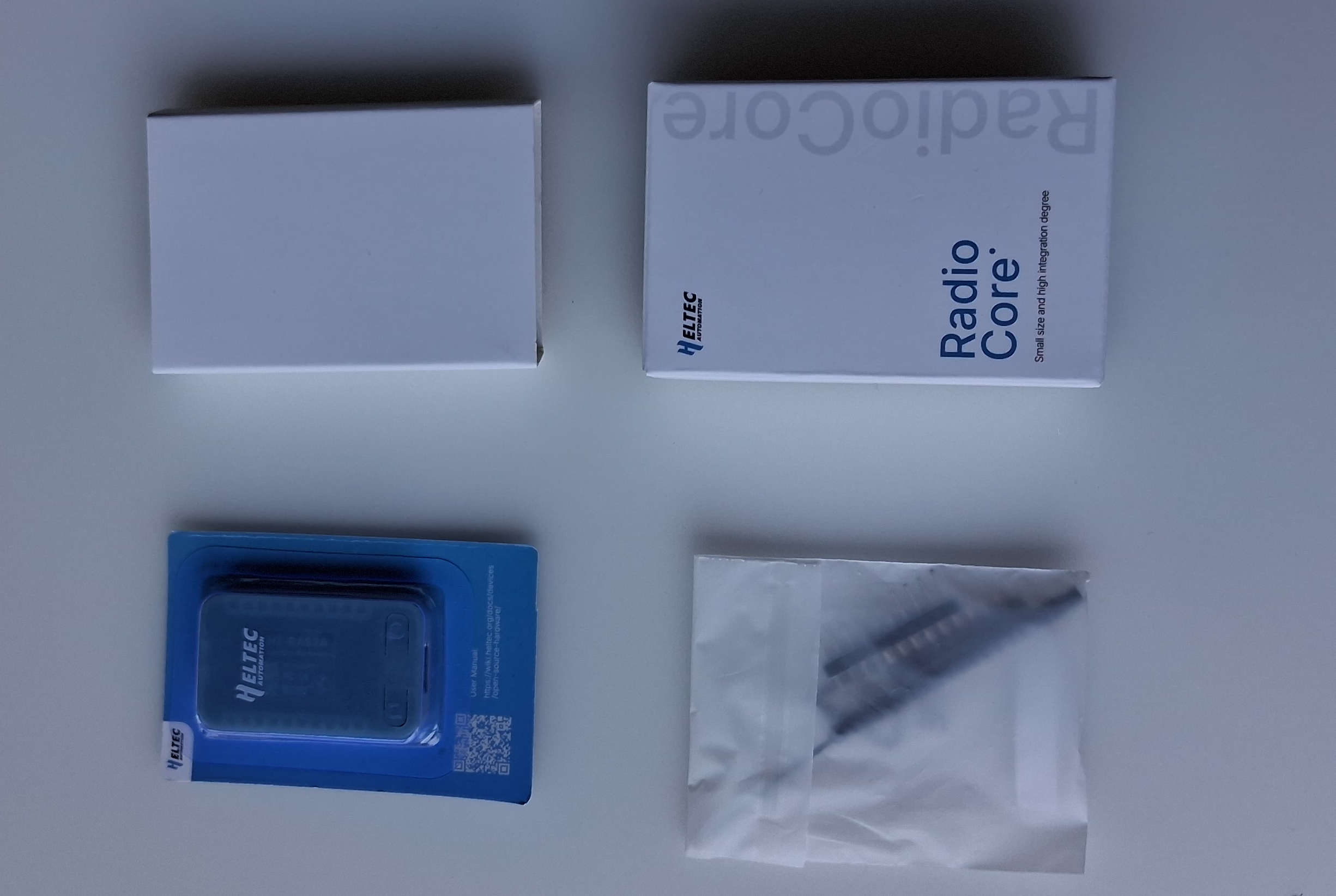
As if the firmware changes weren't enough to keep us busy, 2.8 also brings support for a range of additional hardware, including the T-Watch Ultra, ThinkNode M8 and M9, Wio Tracker L1 Pro 1W and L2, T-Beam BPF, Heltec RC boards, and several other devices.
That's quite a list, and it makes me wonder how many interesting projects will appear as people get their hands on the new hardware.
For now, I won't pretend that I've tested these devices or know how well they perform. Hardware support is a starting point, not a guarantee that every feature will work exactly as expected.
But I can already see the temptation to acquire something new and start experimenting. Whether I can justify another gadget is a different question entirely!
So, should we be excited?
I think so, with one important qualification: Meshtastic 2.8.1 is still an Alpha release, and this is not the time to treat it as a routine upgrade for every node in an established network.
For now, I'll be following the development and waiting until I'm ready to experiment with the new features myself. There is plenty to explore, but sometimes the most interesting developments aren't found in a firmware release at all. Sometimes they're found in what other people decide to build with the hardware they already have.
A Reverse-Engineered Pager Becomes a Working Meshtastic Node
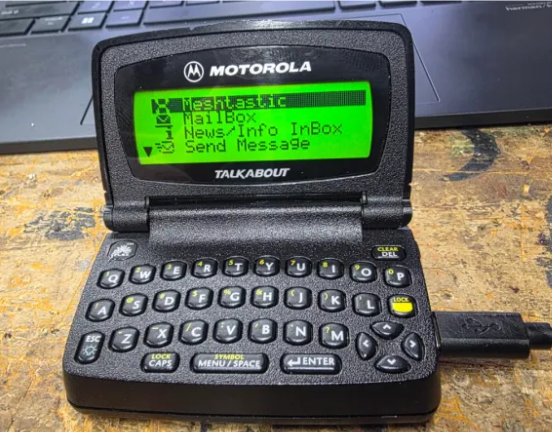
Image by zindustries87
I have to say, when I saw this project, I jumped straight onto Tradera and started scouting for an old pager!
Reddit user zindustries87 has started converting an old-school Motorola T900 two-way pager into a Meshtastic node. They've reverse-engineered both the screen and keyboard and now have them working with a modern microcontroller. The plan is to use a Heltec V4 for the LoRa hardware, but there's still plenty of work to do.
Some of the features they'd like to include are:
- Meshtastic messaging using the original keyboard and LCD
- Bluetooth connectivity to an Android phone for receiving and replying to SMS messages using your normal phone number
- Wi-Fi messaging between devices through a separate pager-style messaging service
- Classic little 90s and early-2000s games like Snake
- Vibration and old-school pager and phone alert tones
Quoting him:
"Basically I want it to still feel like a T900, just with everything you'd want one to do in 2026."
It's projects like this that get me all excited about the hobby, and also frustrated with all the other things I have to do to earn money. Haha!
In closing
So yes, this has just been a quick check-in, but that doesn't mean there isn't plenty happening behind the scenes in the wider mesh community.
I'm still amazed by the creativity of people in this hobby. Projects like the old pager remind me that there is always something new to learn, build or experiment with. And perhaps being away for a little while isn't entirely a bad thing. Sometimes it gives you the chance to take a step back and see things with fresh eyes.
I hope this little roundup inspires you to explore something new, or perhaps even start a project of your own.
Until next time, keep on dreaming and keep on creating!
Written by JohanV — 2026-10-25