Antennas are magic
Or are they?
This is another post in my antenna series, written for everyone growing a mesh in a small town (big town as well) and hitting the same problem I did: big distances between nodes, awkward locations, or (like me) sitting in a total radio-silent pit.
We can’t crank up the power on the unlicensed band, so the only real lever left is the antenna. And that’s exactly where the frustration begins.
The Bigger the Better?
When I first started playing with radios, my belief was simple: the bigger the antenna, the better. More metal should mean a stronger signal, right? At least I knew one thing — it had to be metal.
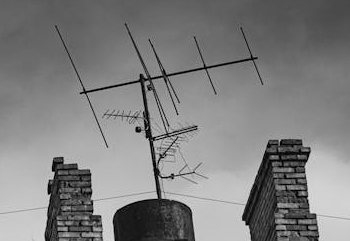
As I read more, I started to understand that radios work on specific frequencies, and antennas have to match those frequencies — more specifically, the wavelength.
Where:
λ is the wavelength,
v is the phase velocity, and
f is the frequency.
In the case of electromagnetic radiation in free space, the phase velocity is the speed of light, about 3×10⁸ m/s.
The “Holy Grail” of Gain
Then I discovered antenna gain. It sounded like the holy grail: higher gain = reach farther with the same power.
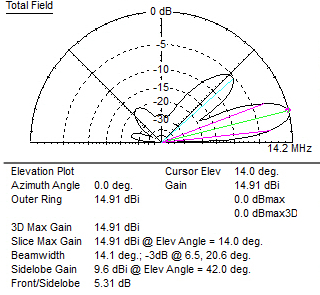
Perfect. Just slap on a 13 dBi Yagi and call it a day!
Where: GdBi is the gain in decibels relative to isotropic, and Gratio is the linear power gain ratio.
That excitement didn’t last long.
Yes, higher gain lets you reach farther — but it comes at a cost: direction. You’re not creating more energy; you’re just focusing the same amount into a narrower beam.
A Light Bulb Moment
At this point I needed something visual to really get it — and then the light bulb went on.
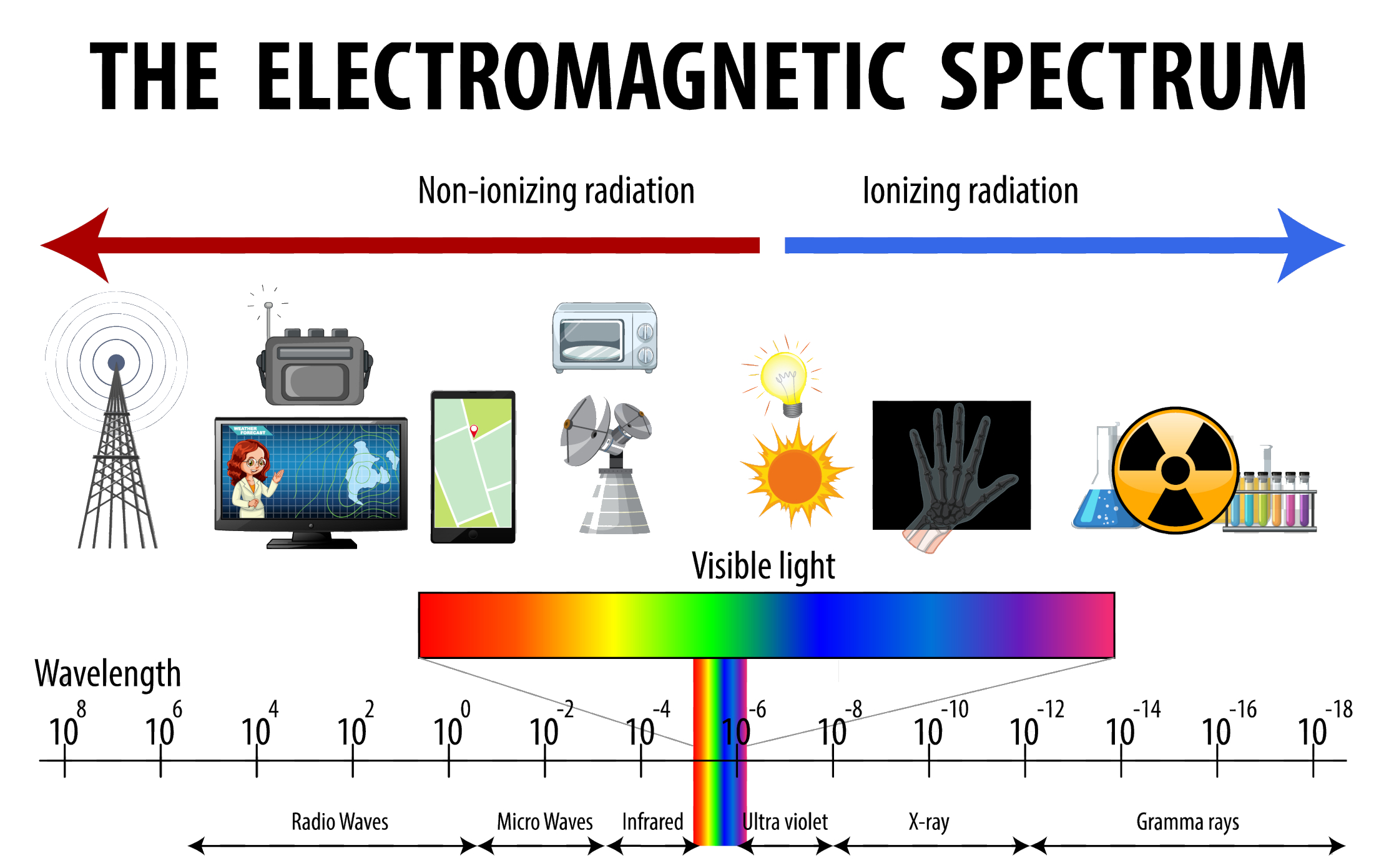
Light and radio waves are both electromagnetic waves (close enough for this analogy). So if I can picture it with light, I can understand what’s happening in the RF world.
Omnidirectional: The Bare Bulb
Start with a plain 60 W light bulb.
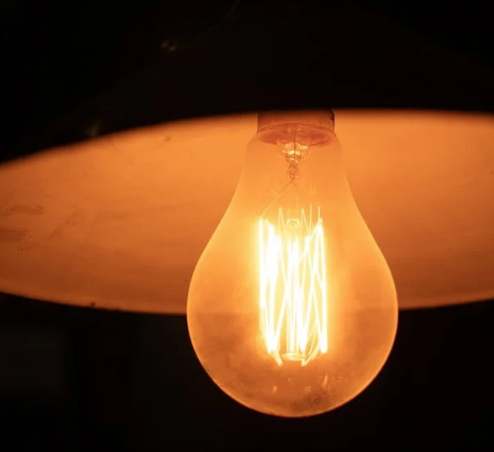
This is your basic monopole antenna. The light spreads out in all directions. Put a sensor anywhere around it and it will pick up some light — as long as it’s not too far away.
We can even stretch the analogy: different colors represent different frequencies. A red bulb and a red sensor (matching wavelength) work great — if there’s enough signal.
Distance vs Direction
But as the sensor moves farther, the light gets too weak.
So how do we fix it?
We don’t make the bulb brighter — we redirect the light.
Introducing Gain
Now put reflectors around the bulb.
Suddenly the light is much brighter in some directions… and darker in others.
That’s antenna gain. Same total energy, just focused. Your sensor can now be much farther away — but only if it’s in the right spot.
From Bulb to Flashlight
Add even more reflectors and you’ve basically built a flashlight.
That’s your Yagi antenna.
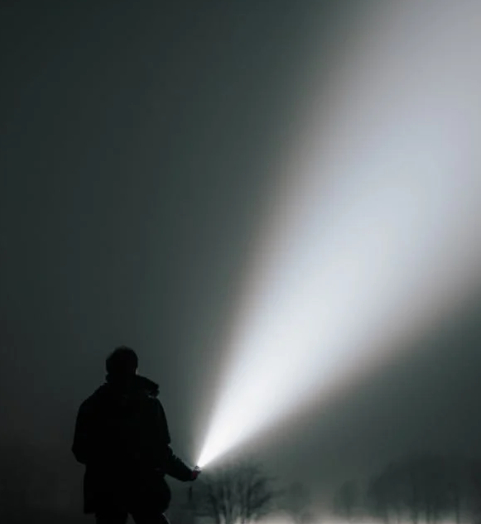
The same 60 W bulb can now “reach” way farther — but only in one narrow direction. Point it the wrong way and the sensor sees nothing.
The Real Realization
Here’s the part that really flipped the switch for me:
If that bulb could also detect light, it would only detect light coming from the exact directions it can shine.
Your antenna receives best in the same directions it transmits best.
Final Thoughts
There’s a lot more we could dive into — reflections, obstacles, absorption, polarization — but the goal here was simple: give you a clear mental picture of what’s really happening when you swap antennas.
Yes, antennas can still feel like magic. But once you understand the basics, the mystery fades and you can actually use it to your advantage.
For most small-town Meshtastic meshes, start with a simple ½-wave dipole or 5/8-wave vertical before jumping to directional antennas. They’re forgiving, easy to build, and often give you the biggest practical improvement.
Now go out and build those antennas.
Written by JohanV
2026-03-29