My Meshtastic Antenna Test “Failed” with a 35 dB Jump
And Why That’s the Best Lesson I Ever Learned
Meshtastic (or really any radio experimenting) has a habit of humbling you the moment you think you’ve figured it out, especially when you start messing with antennas.
I thought I had cracked the code. Swap the stock lipstick antenna for a homemade measuring-tape dipole and boom, RSSI jumped +35 dB. Thousands of times more signal strength! I was ready to declare antenna upgrades the ultimate Meshtastic hack.
Then reality hit. The numbers were too good to be true. What looked like a massive win was actually a masterclass in everything that can go wrong when testing antennas casually. And that failure taught me (and hopefully you) way more than any clean success ever could.
If you’re new to Meshtastic and thinking about upgrading your antenna, read this first. I’ll show you the raw data, exactly where I went wrong, what realistic improvements actually look like, and (most importantly) how to test properly so you don’t fool yourself.
The Setup
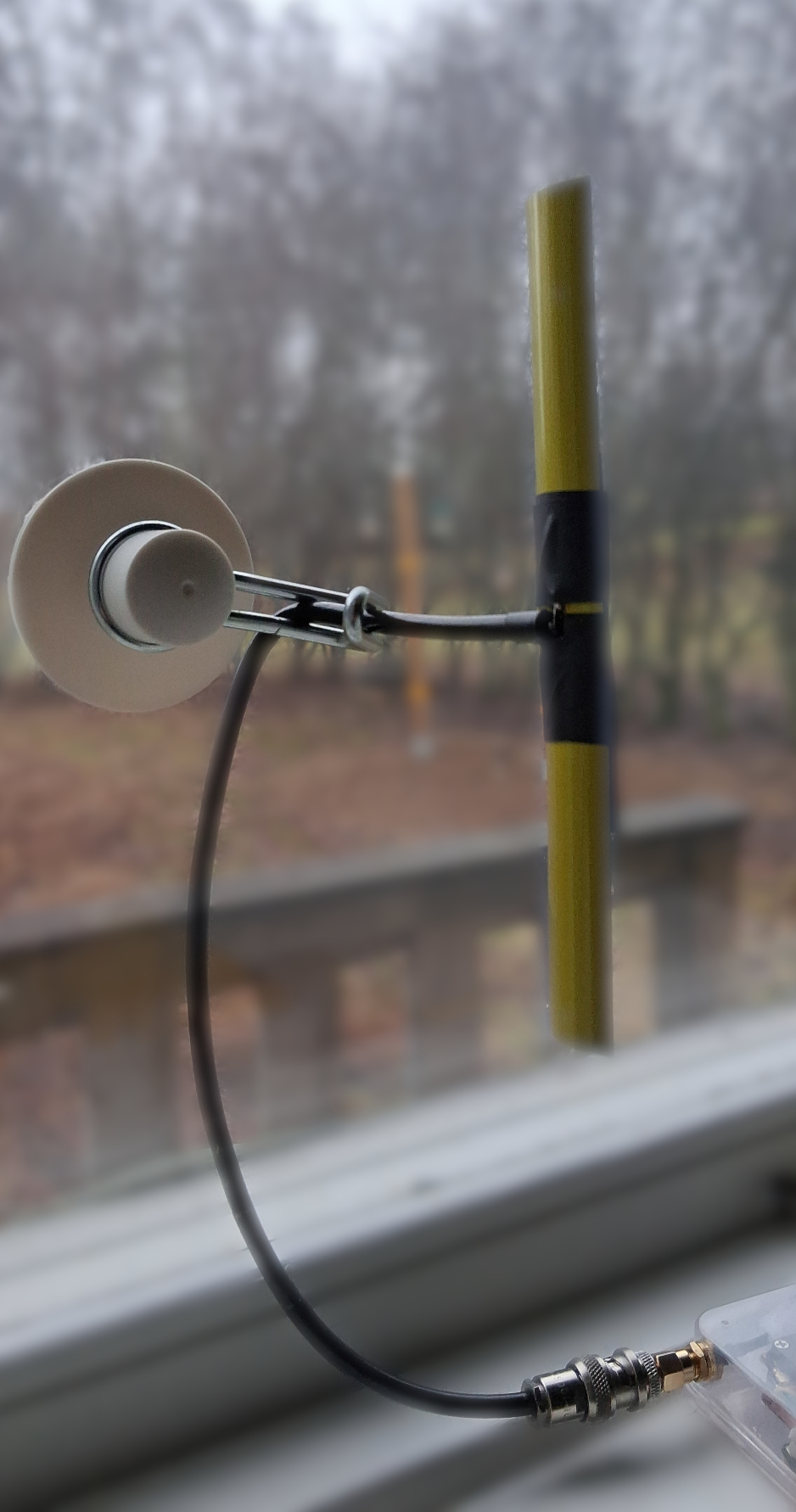
Two Meshtastic nodes configured for EU_868, same location, same firmware, same settings.
Unit B kept the stock antenna. Unit A got the swap. I sent messages back and forth and logged RSSI and SNR. Distance: ~10 meters. Conditions: indoors, no major changes.
The Results That Looked Insane
Antenna 1: Stock Lipstick Monopole
A → B: RSSI -65 dBm, SNR 6.5 dB
B → A: RSSI -40 dBm, SNR 7 dB
Antenna 2: Homemade Half-Wave Dipole
Homemade half-wave dipole built from measuring tape, with two 8.6 cm legs (quarter-wave each) fed at the center.
A → B: RSSI -30 dBm, SNR 6.25 dB
B → A: RSSI -12 dBm, SNR 6 dB
+35 dB and +28 dB improvement. In radio terms, that’s ridiculous. I immediately knew something was off.
Why the Numbers Were Wrong (The Real Lesson)
Experienced antenna builders would have laughed me out of the room and they would be right. A proper half-wave dipole has only around 2 dBi of gain. Even a terrible stock antenna is not going to be 30dB worse unless multiple things go wrong at once.
Here’s what actually happened:
Near-field testing at only ~10 m
10 meters is technically well into the far-field region for these small antennas, but indoors you’re still swimming in reflections, multipath, and coupling effects. Real-world far-field-style testing needs more distance outdoors, think 20-50+ meters line-of-sight.
SWR / tuning verification
My dipole antenna was measured and matched for 869.525MHz, while afterwards testing the stock “lipstick” monopole it was way closer to 900MHz. Most likely to be a compromise between 868MHz and 915MHz bands and to be shipped with any of the units.
Missing ground plane and polarization issues
The stock monopole on a small handheld device has almost no ground plane. Orientation wasn’t perfectly controlled. Even modest tilt or a mismatch in polarization between antennas can easily cost you many dB.
Unit asymmetry and noisy RSSI
Unit B was already putting out more power. LoRa RSSI readings are relative and a bit noisy, great for trends, terrible for making big absolute claims from a couple of samples.
No averaging
I didn’t run 20-30 pings and average the results. Single readings can swing significantly, especially indoors.
What Actually Happens in the Real World
When I took everything outside and tested at more realistic distances (roughly 50–150 m), the magic 35dB boost disappeared. The dipole still beat the stock antenna, consistently about 6–12 dB better RSSI, which is exactly what the community tends to see in more controlled tests.
That’s still huge: better reliability, more hops in the mesh, and fewer retries. But it’s realistic, not miraculous.
How to Test Antennas the Right Way
If you want results you can actually trust, here are the rules I wish I’d followed from the start:
Regulations Reminder
In the EU_868 band (what most European Meshtastic users are running), the typical legal limit is 27 dBm ERP (500 mW) with a 10% duty cycle. That 14 dBm figure you sometimes see applies to different sub-bands and other regions, such as 433 MHz, not to the main 868 MHz Meshtastic use case.
Always stay within your local regulations, especially if you’re experimenting with higher-gain antennas.
Why You Should Still Upgrade Your Antenna
Stock antennas are often the weakest link in any Meshtastic node. A well-tuned dipole (or even a better commercial whip) routinely gives on the order of 6-12 dB improvement in real conditions.
That’s the difference between flaky marginal links and rock-solid mesh performance for pennies and maybe 15 minutes of work.
My “failed” test ended up being the most valuable one I’ve ever run. It taught me humility, proper methodology, and respect for real RF testing.
If you’re experimenting, go build that measuring-tape dipole… but test it properly. Share your NanoVNA plots and real-world range numbers in the comments or on Discord, the community loves honest data.
Results may vary. And that’s the whole point.
Written by JohanV
2026-03-15